When Players Break the Boss: How Gaming Communities Forced Studios to Rethink Their Hardest Fights
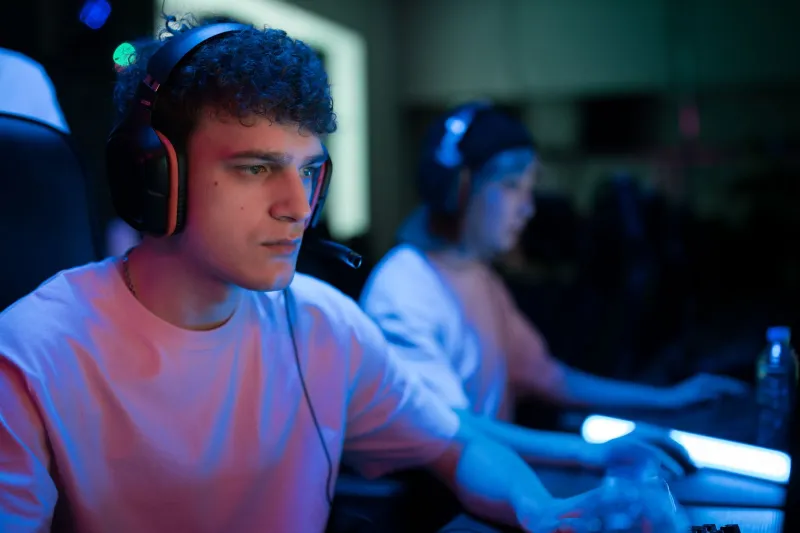
Game studios spend months — sometimes years — designing boss encounters meant to test players at their absolute limits. Then the game ships, and within 72 hours, someone on Reddit has already figured out how to cheese the whole thing with a corner exploit and a stock-standard weapon build. Welcome to modern gaming, where the community doesn't just beat the boss. Sometimes they break it entirely.
That tension between developer intent and player ingenuity has never been more visible than it is right now. With Twitch streams hitting millions of viewers overnight and speedrunning communities dissecting frame data like forensic analysts, the window between "this is a hard boss" and "this boss is actually broken" has gotten razor thin. And when that line gets crossed publicly, studios have no choice but to respond.
The Community as a Bug-Finding Machine
Here's the thing game designers don't always account for: players collectively log more hours in the first week of a game's release than any QA team could cover in a year of testing. That kind of volume turns up problems fast.
When Elden Ring launched in early 2022, the boss Malenia — already notorious before release — became a full-blown internet event. Players quickly discovered that her lifesteal mechanic was triggering even when attacks were blocked or dodged in certain conditions. Clips of her healing off whiffed hits flooded social media. Streamers with massive audiences were losing their minds on camera, and the discourse hit mainstream gaming outlets within days. FromSoftware acknowledged the issue and patched the specific healing triggers in subsequent updates, though they kept the core difficulty intact — a move that landed well with a fanbase that respects a hard fight but not an unfair one.
That's the nuance studios have to navigate. There's a difference between a boss being legitimately punishing and a boss being broken in ways the developers didn't intend. Players are very good at telling the difference, and they're very loud about it.
AI Loops and the Speedrunner Effect
Speedrunning communities have an almost supernatural ability to find the exact inputs that make a boss's AI completely fall apart. These aren't exploits born from laziness — they're the result of obsessive pattern recognition and a willingness to test every possible edge case.
One of the more famous examples involves Sekiro: Shadows Die Twice, where players discovered that certain boss AI routines could be locked into predictable loops under specific positioning conditions. What was designed as a dynamic, reactive fight became, in the hands of the speedrunning community, a choreographed sequence. Clips went viral. Casual players started asking if the fights were actually hard or just hard until you knew the trick.
From Software's general philosophy leans toward letting communities find their own paths through challenges, but other studios have been less comfortable watching their carefully designed encounters get dismantled on stream. The pressure to patch isn't always about fairness — sometimes it's about protecting the intended experience for players who haven't gotten there yet.
When Damage Math Goes Wrong
Some of the most embarrassing community discoveries involve damage calculations that simply don't work the way they were supposed to. Number-crunching players — the kind who build spreadsheets for fun — have a habit of finding these faster than anyone expects.
Destiny 2 has been a recurring case study here. Bungie's raid bosses are designed around specific damage thresholds, and when players discovered that certain weapon combinations or ability interactions were outputting two or three times the intended damage, the results were spectacular and short-lived. Boss encounters that were supposed to be multi-phase endurance tests got deleted in seconds. Clips hit YouTube with millions of views. Bungie's patch response times shortened noticeably over the years as the studio got used to playing catch-up with its own community.
The interesting wrinkle is that Bungie's relationship with these discoveries has evolved. Early on, hotfixes came fast and hard, sometimes frustrating players who felt like their creative builds were being punished. More recently, the studio has shown a willingness to let certain interactions ride for a season before addressing them — an acknowledgment that community-discovered power can be part of the fun, at least temporarily.
Embrace It or Erase It: The Studio Decision
Not every studio rushes to patch what the community finds. Some developers have made a calculated decision to embrace player discoveries as part of the game's living identity.
Monster Hunter has long had a culture of speedrunning and optimal hunting strategies that push far beyond what the developers explicitly designed. Capcom has generally taken a hands-off approach, watching players optimize hunts into art forms without stepping in to lock down the mechanics. The result is a community that feels ownership over its mastery — and a game that stays relevant long after launch.
On the flip side, competitive games have almost no tolerance for unintended mechanics once they hit a certain level of visibility. When a boss-adjacent mechanic or PvE encounter in a game with competitive modes gets cracked open, the patch usually comes fast. The stakes are different when other players' experiences are directly affected.
The Social Media Pressure Cooker
What's changed most in the last five years isn't the discovery of exploits — players have been breaking games since the cartridge era. What's changed is the speed and scale at which those discoveries become public knowledge and community expectation.
A streamer with 200,000 followers finds a busted boss interaction on a Tuesday night. By Wednesday morning, it's a trending clip. By Thursday, casual players are attempting it in their own runs. By Friday, gaming journalists are asking the studio for comment. That's not a hypothetical — it's basically the timeline for every major boss exploit story of the last few years.
Studios now have social media teams specifically watching for this kind of content. Community managers are monitoring Discord servers and Reddit threads in real time. The feedback loop between player discovery and developer response has compressed dramatically, and that compression has made game design a more reactive, public-facing discipline than it's ever been.
What This Means for Boss Design Going Forward
The honest answer is that developers are building with community scrutiny baked in. That doesn't mean they're making easier fights — if anything, the arms race between player skill and boss difficulty has pushed both sides harder. But it does mean more robust QA processes, more stress testing of edge cases, and a greater awareness that whatever ships on day one is going to get stress-tested by millions of people with cameras running.
For players, this dynamic is genuinely exciting. The community's role in shaping how a game's hardest encounters are understood — and sometimes changed — is a form of collective ownership that didn't really exist before streaming and social media. We're not just dropping the boss anymore. We're rewriting the terms of the fight in real time.
And studios, whether they like it or not, are listening.