Why Boss Battles Break Your Brain — And What Great Developers Do About It
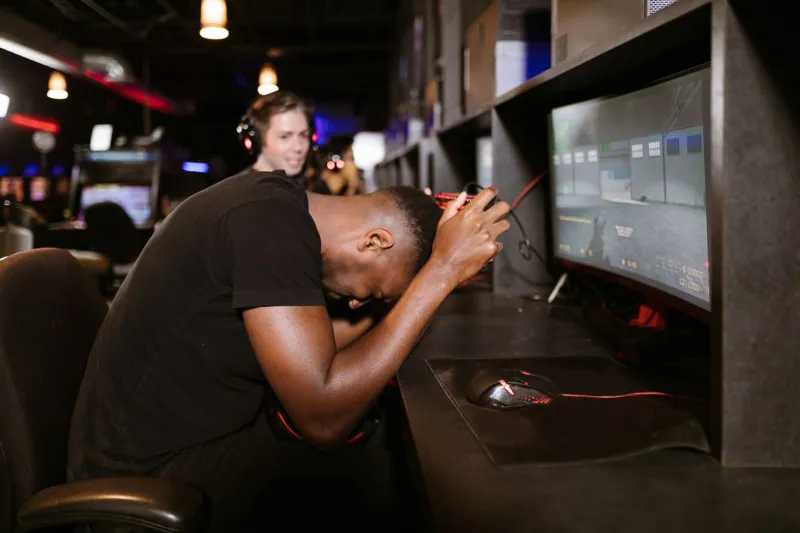
You've been at it for two hours. Same boss. Same phase transition. Same instant-kill attack that comes out of nowhere every single time. Your hands are sweaty, your jaw is tight, and somewhere deep in your lizard brain, you're questioning whether any of this is even worth it.
Then you beat it. And it feels like the greatest thing that's ever happened to you.
That swing — from pure misery to pure triumph — isn't an accident. It's design. And understanding how it works might just change the way you play.
The Mental Load of a Boss Encounter
Boss fights aren't just mechanical challenges. They're cognitive ones. Every time you enter an arena, your brain is doing a ton of heavy lifting: tracking attack patterns, managing resources, adjusting positioning, and processing visual and audio cues all at once. That's a serious mental workout.
Psychologists call this kind of simultaneous demand on attention "cognitive load," and when it spikes too high too fast, players don't just struggle — they shut down emotionally. Frustration sets in, and frustration is the enemy of learning.
The best boss designers understand this. They build encounters that escalate gradually, giving players just enough information to feel like they're making progress even when they're dying repeatedly. It's the difference between "I have no idea what's happening" and "I almost had it that time."
That second feeling? That's the hook. That's what keeps you in the chair.
Pattern Recognition: The Secret Skill You're Already Using
Here's something wild: every time you die to a boss, you're actually getting better at fighting it. Your brain is cataloging attack telegraphs, timing windows, and spatial patterns whether you realize it or not. This is pattern recognition in action, and it's one of the most powerful tools the human brain has.
Great boss design leans into this. When a developer gives an attack a clear visual cue — a wind-up animation, a color change, a distinctive sound — they're essentially teaching you without a tutorial. Repeated exposure to that cue builds what sports psychologists call "muscle memory," though it's really more about neural pathways than actual muscle. Your hands start reacting before your conscious brain even registers the threat.
This is why a boss that felt impossible on attempt five can feel almost manageable by attempt twenty. You haven't changed. Your nervous system has.
The problem arises when developers skip the telegraphing step entirely. Attacks that appear random, hitboxes that don't match visual animations, or damage values that feel arbitrary — these break the feedback loop. Players can't learn from deaths that feel unfair, and that's where genuine frustration (rather than productive challenge) takes root.
The Difficulty Sweet Spot: Harder Than You Think to Find
Talk to any indie developer about boss design and they'll tell you the same thing: finding the sweet spot is brutally hard. Make a boss too easy and players feel nothing when they win. Make it too hard and they walk away before they ever experience that payoff.
Several indie studios have spoken openly about this in postmortems and interviews. The team behind the acclaimed roguelike Hades described spending months tweaking individual boss phases based on playtest data, specifically watching for the moment players stopped attempting a fight entirely — that dropout point being the clearest signal that difficulty had crossed from challenging into punishing.
Other developers use what some call the "three attempt rule" as a rough internal benchmark: if a playtester can't identify at least one thing they did wrong within three attempts, the boss's communication is failing, not the player's skill. That reframe — putting the burden of clarity on the designer rather than the player — is a philosophy shift that separates thoughtful design from lazy difficulty spikes.
When Difficulty Becomes Cruelty
There's a real distinction between a boss that's hard and a boss that's unfair, and players feel it viscerally even if they can't always articulate why.
Unfair difficulty usually shows up in a few recognizable forms: attacks with no readable telegraph, RNG-dependent outcomes that punish good play, or long unskippable sequences that force players to waste time before they even reach the challenge. That last one — the "walk of shame" before a hard boss — has become something of a meme in the gaming community, and for good reason. It artificially inflates difficulty by taxing patience rather than skill.
Developers who've patched out these kinds of issues after launch often see immediate community sentiment shifts. FromSoftware, no stranger to brutal boss design, has quietly adjusted attack timings and hitboxes across multiple titles post-release, and the response is almost always positive — not because players wanted an easy fight, but because they wanted a fair one.
Practical Tips for Pushing Through the Wall
Okay, so you're stuck. The boss is wrecking you. Here's what actually helps:
Take a break and let your brain consolidate. This sounds counterintuitive, but sleep and rest genuinely improve pattern retention. Coming back after a night's sleep with fresh eyes is a real strategy, not an excuse to quit.
Watch, don't just react. Spend one or two attempts doing almost nothing except observing the boss's moveset. Let yourself die. You're gathering data, not wasting time.
Identify your specific death point. If you're consistently dying to the same attack, that's useful information. Don't just retry blindly — figure out what adjustment would change that specific outcome.
Adjust your build or loadout without shame. Some bosses are genuinely designed to encourage experimenting with different approaches. Switching weapons, spells, or character builds isn't cheating — it's playing the game.
Talk it out. Seriously. The community here at Drop The Boss exists for exactly this reason. Sometimes describing your problem to another player reveals a solution you couldn't see on your own.
The Payoff Is the Point
Here's the thing about all this mental anguish: it's load-bearing. The frustration, the failure, the grinding repetition — all of it is what makes the eventual victory feel enormous. Developers who understand psychology know they're not just designing fights. They're designing emotional arcs.
The best boss battles in gaming history aren't remembered because they were hard. They're remembered because beating them meant something. That meaning is engineered, carefully and deliberately, by people who understand exactly how much strain a human brain can take before it breaks — and exactly how to pull you back from the edge.
So next time a boss is wrecking you, remember: that's not a flaw. That's the design working exactly as intended. The question is whether you're going to let it work on you — or work with it.
Drop the boss. That's what we're here for.