Reading the Room: How Boss Designers Bury Clues That Only the Best Players Ever Find
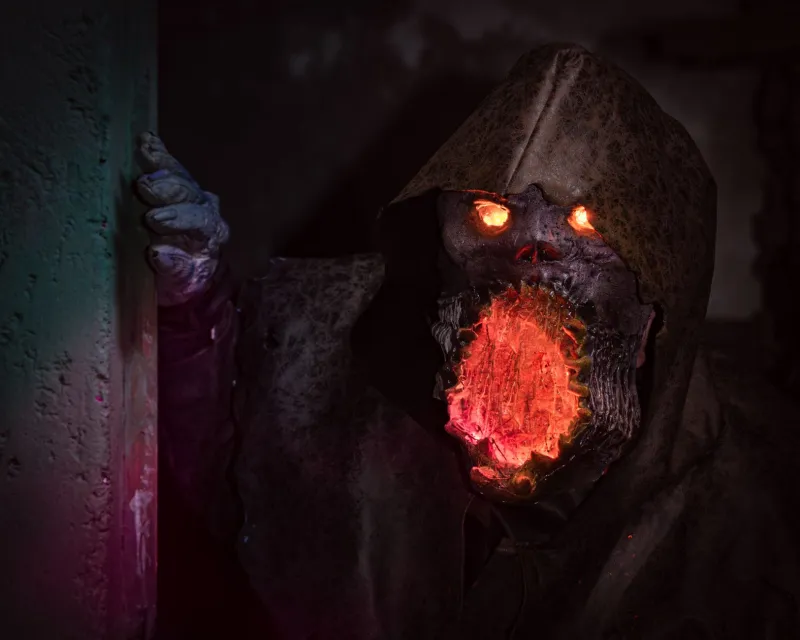
There's a moment every dedicated player knows. You've died to the same boss seventeen times. You're frustrated, maybe a little humbled, and then — something clicks. You notice a flicker in the boss's left arm before the sweep attack. You remember that the merchant before the fog gate was selling a specific fire-resistant ring you ignored. Suddenly the fight transforms from a wall into a puzzle you were always supposed to solve.
That's not luck. That's intentional design doing exactly what it was built to do.
The best studios in the business don't just build hard bosses — they build hard bosses wrapped in a full layer of embedded instruction. The difficulty is real, but so is the roadmap. You just have to know how to read it.
The Architecture of a Hidden Tutorial
Here's the thing most casual players never realize: boss fights rarely exist in isolation. The corridor leading up to them, the enemies populating that corridor, the item drops scattered across the floor — all of it is authored. Game designers at studios like FromSoftware treat the entire pre-boss zone as a controlled classroom.
Take Dark Souls. The enemies in the areas before major bosses almost always telegraph the attack patterns you're about to face at a larger, more dangerous scale. If you're fighting groups of enemies that lunge forward with a delayed overhead strike, you can bet the boss in the next room has a version of that same move. The smaller encounters are basically training dummies dressed up as threats.
Capcom does this with Monster Hunter in a different but equally deliberate way. The ecology of a zone — which monsters are present, how they behave, even what time of day the game simulates — feeds directly into understanding what the apex predator you're hunting is capable of. Players who pay attention to environmental storytelling arrive at the boss encounter with a mental model already partially built.
Environmental Cues: The Room Is Talking to You
Before you even see a boss health bar, the arena itself is communicating. Skilled players have learned to treat boss rooms like a pre-fight briefing.
Wide, open spaces with high ceilings? Expect aerial attacks or massive AoE sweeps that punish players who cluster near the walls. Pillars and obstacles scattered around the room? The designer is telling you cover matters — something about this fight rewards positional play. A room with elevated platforms on multiple sides? You're probably going to want the high ground at some point, or the boss will use it against you.
Elden Ring is a masterclass in this approach. The Radahn arena stretches across an entire coastline. That's not an aesthetic choice — it's a mechanical one. The sheer scale of the space hints at the projectile-heavy, wide-range attacks Radahn throws at you. Players who scan the environment before sprinting in are already one step ahead.
Water on the floor. Torches that can be extinguished. Sand that slows movement. Every environmental detail in a well-designed boss fight is a piece of information.
NPC Dialogue: The Hints Nobody Reads Twice
This is where casual players lose the most ground without even knowing it. The NPCs populating the world around a boss encounter are often the most direct communication channel a designer has with the player — and most people sprint past them.
In Sekiro: Shadows Die Twice, NPC conversations and item descriptions consistently reference the concept of "Posture" before you ever encounter an enemy that has it as a core mechanic. The game is coaching you through lore. Players who absorb that dialogue understand that the entire combat system is built around breaking an opponent's composure rather than draining their health. That realization transforms the experience completely.
Capcom's Devil May Cry series embeds similar coaching in mission briefings and character banter. Dante's casual quips before a boss encounter often contain functional information about elemental weaknesses or behavioral patterns. It's dressed up as personality, but it's also instruction.
The lesson here? Before your next boss run, go back and actually listen to what the world is telling you. Game writers and designers collaborate specifically to hide mechanical hints inside narrative flavor.
Weapon and Item Placement: Follow the Breadcrumbs
Nothing in a well-crafted action game is placed by accident. If you find a specific weapon, consumable, or upgrade sitting in a chest right before a boss fog gate, that item is there because the designer wanted you to have it for the fight ahead.
This is one of the most direct forms of difficulty communication in the medium. Bloodborne is famous for it — the placement of Oil Urns near the Cleric Beast is a quiet nudge toward fire damage as a viable strategy. Players who grab them and experiment discover a meaningful advantage. Players who ignore them and go in swinging their base weapon are fighting a harder version of the same fight.
The same principle applies to elemental resistances, status-cure items, and weapon-type advantages. When a game drops three of the same consumable in a pre-boss room, it's not random loot generation. It's a flare gun.
Visual Storytelling in the Fight Itself
Once the fight begins, the design language shifts into real-time communication. Every great boss is animated with intention. The tells are there — the question is whether you're watching for them or just reacting to them.
Posture shifts, eye glow changes, wing tremors, vocal cues — these are all part of a visual vocabulary that animators and designers develop together. FromSoftware in particular has built a reputation for bosses whose attack chains are readable if you study the wind-up animations rather than the attack itself. By the time the sword is swinging, it's already too late. But the shoulder rotation that precedes it? That's your window.
Players who reach true mastery of a boss fight describe the experience as reading a sentence rather than reacting to noise. The attack pattern becomes a language, and fluency is what separates someone grinding through deaths from someone who's genuinely learned the encounter.
Why It Matters Beyond the Win Screen
Understanding this design layer changes how you approach every new game you pick up. Studios that invest in this kind of embedded communication are making a specific promise to their audience: pay attention and we'll reward you. That's a meaningful contract.
For the competitive gaming community, this literacy is a genuine edge. In games where boss encounters feed into ranked modes, challenge runs, or community time trials, the players who've internalized the design language of a fight will always have a structural advantage over those who are purely grinding repetitions.
At Drop The Boss, we talk a lot about dominating encounters — but domination isn't about brute force. It's about comprehension. The boss is always communicating. The designers spent months making sure of it.
Your job is to finally start listening.