When the Hit Doesn't Land: Gaming's Worst Boss Hitboxes and the Developers Still Getting It Wrong
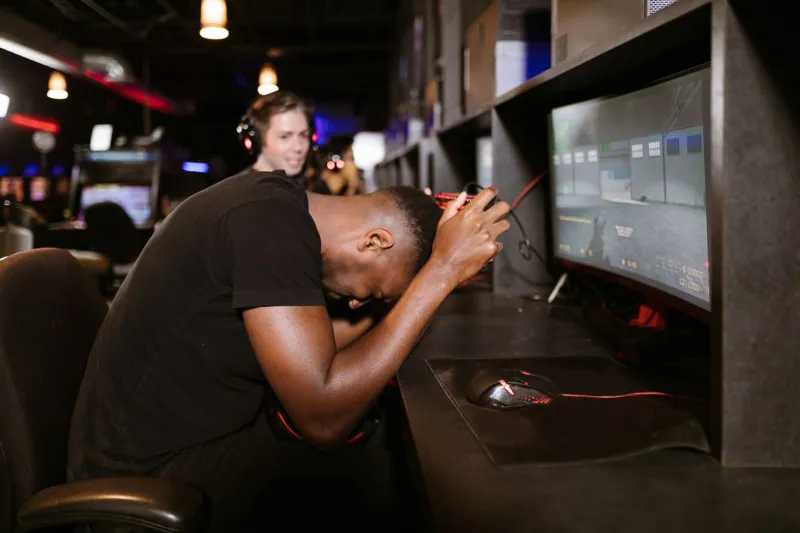
You dodge perfectly. You read the animation. You fire the shot, swing the sword, or land the combo — and somehow, nothing happens. The boss doesn't flinch. Your health drops anyway. And somewhere deep in the code, a hitbox quietly laughs at you.
Hitbox problems in boss fights aren't just annoying. They're trust-breaking. A boss encounter is a contract between the developer and the player: learn the patterns, execute the response, get the reward. When hitboxes fail, that contract is void. You're not losing to the boss anymore — you're losing to geometry.
Let's talk about why this keeps happening, which games have served up the most egregious examples, and what it actually costs players who take these fights seriously.
What Even Is a Hitbox, and Why Is It So Hard to Get Right?
At its most basic, a hitbox is an invisible shape — usually a box, sphere, or capsule — attached to a character or attack. When two hitboxes overlap, the game registers a collision: a hit lands, damage applies, a sound effect fires. Simple in theory. Brutal in practice.
The problem is that modern game characters are complex 3D models with dozens of moving parts. Animating a boss to look believable is already a massive technical lift. Making the invisible collision geometry match exactly what the player sees on screen? That's a separate system entirely, and those two systems don't always talk to each other cleanly.
Compounding the issue: performance optimization. Developers frequently simplify hitboxes to reduce the processing load, especially on console hardware. A dragon's wing might look like a sweeping, curved blade on screen, but the hitbox treating it as a flat rectangle saves significant CPU cycles. You'll never notice — until you do, and then you'll never un-notice it.
Network latency adds another layer for online games. What you see on your screen isn't always what the server has processed. That gap, even measured in milliseconds, is enough to make a perfectly timed dodge register as a hit, or a landed attack fail to connect.
Case Study: Dark Souls and the Curse of the Grab Attack
Few franchises have more passionate hitbox discourse than FromSoftware's Souls series. Skilled players have catalogued dozens of grab attacks that seem to reach through space and time to snatch a player character who was clearly, visually, not within arm's reach.
The Bed of Chaos from Dark Souls is practically a meme at this point. The boss has areas where falling through the floor registers as taking damage before any visible attack connects. Speedrunners have mapped the exact pixel-level boundaries of these zones, and the data is wild — the collision geometry and the visual model are sometimes separated by what looks like several feet of empty air.
This matters beyond frustration. In competitive speedrunning communities, these hitbox quirks become the meta. Runners have to learn not just the intended fight, but the broken geometry layered on top of it. That's skill, absolutely — but it's skill built on a flawed foundation.
Case Study: Elden Ring's Malenia and the Lifesteal Phantom
Malenia, Blade of Miquella, might be the most-discussed boss in recent gaming history. Her signature move, Scarlet Aeonia, involves a dive attack that — even if you roll through it successfully — can still trigger her lifesteal mechanic, healing her for damage that, technically, never landed.
The community identified this as a hitbox issue fairly quickly after launch. The attack's lingering flower bloom effect had a damage zone that persisted longer than the visual suggested, catching players who believed they'd safely cleared the animation. Patch updates addressed some of this, but the conversation it sparked in forums across Reddit, Discord, and competitive communities was enormous.
For players grinding to beat Malenia legitimately — or those running no-hit challenge categories — this wasn't a quirk. It was a fundamental fairness problem.
Why Don't Developers Just Fix It?
Here's the uncomfortable truth: hitbox precision is expensive, time-consuming, and often deprioritized against other production pressures.
Developers working in large studios have noted publicly that QA testing for hitbox accuracy is largely manual. You have to play every attack from every angle at every point in an animation cycle to catch the edge cases. Automated testing helps, but it can't replicate every player behavior. And when a game ships with hundreds of enemies and dozens of bosses, each with multi-phase attack patterns, the scope becomes almost incomprehensible.
Indie studios face this even harder. A two-person team making an action game with ambitious boss designs simply might not have the resources to do the level of hitbox polish that players expect from a AAA title.
The result is that hitbox bugs often make it to launch and get patched reactively — if they get patched at all. Older games rarely see retroactive hitbox fixes. The broken geometry becomes part of the game's legacy.
The Competitive Cost
For speedrunners and challenge runners, hitbox inconsistency isn't just annoying — it invalidates runs. When a category requires a no-hit clear and a boss lands damage through a technically successful dodge, there's no recourse. The run is dead. Hours of setup, routing, and execution disappear because a collision box was three pixels too wide.
Competitive boss rush communities have started documenting hitbox behaviors with the same rigor that fighting game players use to study frame data. They're essentially reverse-engineering the invisible geometry of these fights to compete fairly within a broken system. That's impressive. It's also a sign that something went wrong upstream.
What Good Hitbox Design Actually Looks Like
It's worth noting that this problem is solvable. Games like Hades and Hollow Knight receive consistent praise for hitbox accuracy. Players in those communities rarely complain about invisible hits — because the developers invested heavily in making the collision geometry match the visual presentation.
Hades in particular benefits from a top-down perspective that simplifies the geometry problem, but the team at Supergiant also built tools specifically to visualize and test hitboxes during development. That investment shows in the final product.
The lesson isn't that big studios can't do this — it's that they need to treat hitbox fidelity as a first-class design priority, not an afterthought. When you're building a game where the entire value proposition is the satisfaction of a well-executed fight, the hit has to land when the hit should land. Full stop.
The Bottom Line
Hitbox failures are one of those issues that casual players might shrug off but that reveal something important about how seriously a studio takes its own combat design. At Drop The Boss, we spend a lot of time in these fights — and we feel every phantom hit, every invisible wall, every grab that stretches across impossible distances.
The technology to do this right exists. The design philosophy to prioritize it exists. What's missing, too often, is the commitment to see it through. Until that changes, players will keep dodging attacks that still connect, and landing hits that don't.