Your Brain Is the Real Final Boss: The Science of Learning Impossible Fights

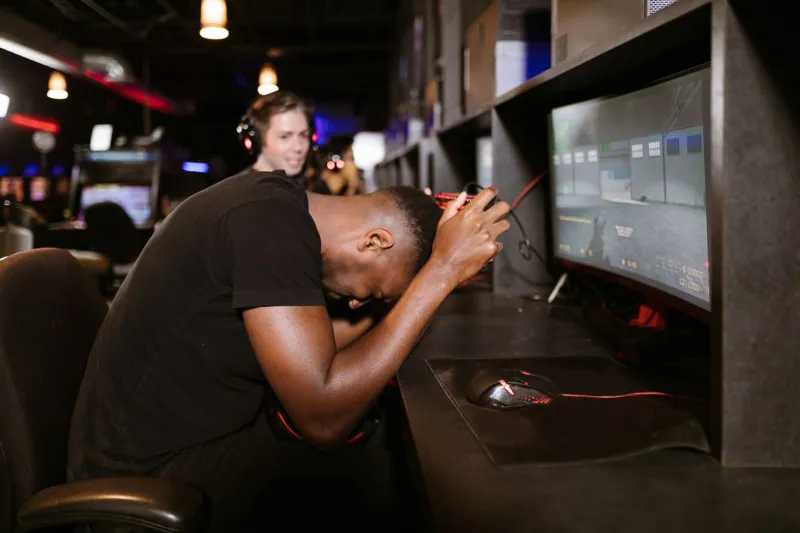
At some point, almost every serious action-game player has experienced the same disorienting moment. You've been stuck on a boss for days. You've watched tutorial videos, adjusted your stats, tried different approaches. Nothing works. Then — and this is the part that feels almost mystical — you sit down one afternoon and just do it. The fight that felt random and chaotic suddenly has a rhythm. You're dodging attacks you couldn't even see before. You beat it without using a single healing item.
What happened? Did you get lucky? Did the game secretly nerf the boss? Did you finally "git gud" in some vague, undefined way?
Actually, your brain did something genuinely remarkable — and the science behind it is fascinating enough to change how you think about practice, failure, and what it means to be good at a game.
The Loop You Don't Notice You're Running
Every time you attempt a boss fight and fail, your brain is doing something that feels like nothing: filing away information. The timing of that overhead slam. The brief window after the combo ends. The tell that precedes the grab attack. You're not consciously cataloguing any of this — you're usually too busy panicking — but your brain is running a background process, building a model of the encounter.
Dr. Priya Nair, a behavioral neuroscientist at a research university in the Pacific Northwest who studies motor learning and pattern recognition, explains it this way: "The brain is fundamentally a prediction machine. Every failed attempt is data. You're not just practicing the right moves — you're teaching your nervous system what to expect, so it can begin preparing responses before you consciously decide to make them."
This is why the fortieth attempt often feels qualitatively different from the first twenty. You're not just better — your brain has built a predictive model of the boss's behavior that's detailed enough to start generating automatic responses. The fight stops feeling reactive and starts feeling like reading.
Muscle Memory Isn't Actually in Your Muscles
The phrase "muscle memory" is a little misleading. Your muscles don't store anything. What we call muscle memory is actually a form of procedural memory encoded in the cerebellum and basal ganglia — brain structures that handle automatic, well-practiced physical actions. When a skill is sufficiently rehearsed, the cerebral cortex (the slow, conscious part of your brain) hands execution off to these faster, lower-level systems.
In practice, this means that once you've truly internalized a boss's attack patterns, responding to them stops being a decision. Your hands move before your conscious mind has processed what's happening. This is why elite players often describe hard fights as feeling "like a rhythm game" — they're not wrong. At a neurological level, that's almost exactly what's happening.
"The cortical involvement decreases significantly as a skill becomes automatic," says Dr. Nair. "You're essentially offloading the task to more efficient hardware. That's why experts can perform complex physical sequences while simultaneously thinking about something else entirely."
For boss fights specifically, this has a practical implication: the early attempts where you're consciously thinking "okay, dodge left after the third hit" are actually slower and less reliable than the later attempts where you're just doing it. Conscious control is the bottleneck. The goal of practice is to remove yourself from the loop.
The Frustration Paradox
Here's something counterintuitive: the emotional experience of being stuck on a boss might actually accelerate learning. Research on stress and memory consolidation suggests that moderate emotional arousal — the kind you get from a boss fight that's genuinely difficult but not hopeless — can enhance the encoding of new information.
The key word is "moderate." When frustration tips into genuine rage or hopelessness, the system breaks down. Cortisol floods the brain, and the hippocampus (critical for memory formation) becomes less effective. This is the neurological explanation for why taking a break often works. It's not just that you come back refreshed — it's that sleep and rest allow your brain to consolidate what you've learned without the interference of acute stress.
Marcus Bellamy, a competitive player and coach who works with aspiring action-game players through an online training program based in Atlanta, has built his entire coaching philosophy around this insight. "I tell every student: the session where you make zero progress is usually the session right before the breakthrough," he says. "Your brain is processing. You just can't see it yet. The worst thing you can do is quit in that window."
He adds that he actively coaches players to recognize the difference between productive frustration — the kind that means you're close — and the kind of tilt that means you should step away for an hour.
Why Some Bosses Click Faster Than Others
Not all boss fights are equally learnable, and game design plays a huge role in how quickly the brain can build a reliable model of an encounter.
The most learnable bosses tend to share a few characteristics. Their attacks have clear, readable telegraphs — visual or audio cues that give the player time to prepare a response. Their patterns are consistent enough to be memorized but varied enough to stay engaging. And critically, the gap between cause and effect is short: you make a mistake, you take damage, you understand why immediately.
Bosses that feel unfair — the ones that never seem to click no matter how many attempts you make — often violate one or more of these principles. Attacks with no telegraph, or with telegraphs that don't match the actual timing of the hitbox, break the feedback loop the brain needs to learn. Randomly varying patterns prevent reliable prediction. Long, punishing death animations add artificial delay between mistake and consequence, which research on operant conditioning suggests actively impairs learning.
"The best boss fights are essentially well-designed learning systems," says Dr. Nair. "They give you enough feedback, fast enough, that your brain can update its model efficiently. When a boss feels impossible no matter how much you practice, it's often because the design is interfering with that feedback loop."
The Mental Resilience Factor
Beyond the neuroscience, there's a psychological dimension to boss mastery that doesn't get enough attention: the ability to stay mentally present during failure.
Players who improve fastest at difficult encounters tend to approach each attempt with what psychologists call a "growth mindset" — the belief that current inability reflects a lack of practice rather than a fixed limitation. This isn't just motivational poster material. It has measurable effects on persistence and, ultimately, on outcomes.
Bellamy sees this play out constantly in his coaching work. "The players who plateau are usually the ones who start a run already expecting to die in the same place," he says. "That expectation changes how they play. They tense up. They start making the mistake before they even get there."
The mental game of boss fights — staying curious rather than defeated, treating each death as information rather than punishment — turns out to be as trainable as the physical execution. And it's often the last piece that falls into place right before that breakthrough run.
What This Means for How You Practice
If you take the science seriously, a few practical conclusions emerge. Varied practice beats repetitive grinding — changing your approach slightly between attempts forces your brain to build a more robust model rather than a brittle one. Rest genuinely matters, both between sessions and during them. And emotional regulation isn't a soft skill; it's a core competency for learning under pressure.
Most importantly: the boss that feels impossible probably isn't. Your brain is running the process. Give it the conditions it needs to finish the job.
Drop the boss. Your brain already knows how.