Gut Punch at 30%: How Boss Designers Weaponize Your Exhaustion Against You
You've been in the fight for twenty minutes. Your thumbs ache. You've memorized every attack pattern, dodged every telegraphed sweep, and finally — finally — you've got the boss below 30% health. Victory is close enough to taste.
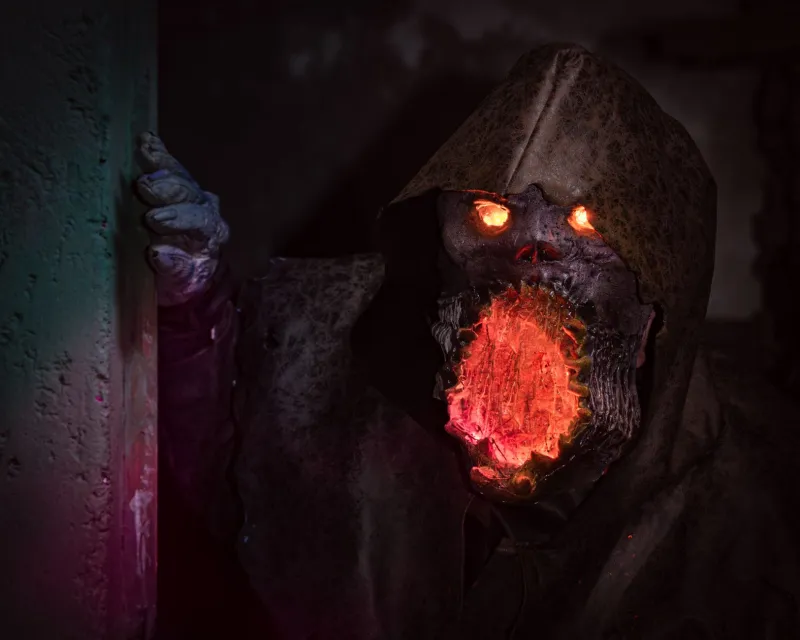
Then the music shifts. The arena lights change. The boss screams, transforms, sprouts a second set of arms, and immediately one-shots you with a move you've never seen before.
Welcome to the phase transition — one of the most deliberately cruel tricks in the game design playbook.
This isn't an accident. It's not lazy design. That gut punch was placed exactly there, at exactly that moment, because developers know something about you that you might not even know about yourself: you are at your most vulnerable right when you think you've won.
The Science of Fatigue in a Boss Fight
Cognitive load is real, and boss fights are basically stress tests for your brain's working memory. Every phase of a fight demands that you store and process a growing library of information — attack timing windows, positional cues, resource management, health thresholds. By the time a boss hits phase two, most players have been running near full mental capacity for several minutes straight.
Game designers know this. The transition point isn't just a narrative beat or a visual spectacle — it's a calculated reset of the playing field at the worst possible moment for the player. Your pattern recognition is locked into the first phase. Your muscle memory is tuned to the rhythms you've already survived. A phase shift forces your brain to essentially reboot while your heart rate is still elevated and your patience is already stretched thin.
The result? Mistakes. Lots of them. And for some games, that's the entire point.
Cheap or Calibrated? The Fine Line Designers Walk
Not every phase transition earns equal criticism. There's a meaningful difference between a boss that introduces genuinely new mechanics at the halfway mark and one that just throws faster, more chaotic versions of old attacks at you while your hands are shaking.
The best phase transitions — think Sekiro's Genichiro giving way to the Sword Saint, or Elden Ring's Radagon melting into the Elden Beast — feel like a second chapter of the same story. The new phase recontextualizes everything you just learned. You're not being punished for surviving; you're being tested on whether you can adapt under pressure. That distinction matters enormously.
Bad phase transitions, on the other hand, feel like the developer is just stacking the deck. Sudden one-shot mechanics that appear without warning. Attack patterns that require frame-perfect responses with zero time to learn. Health gates that reset momentum without adding anything meaningful to the encounter. These aren't challenges — they're frustration delivery systems.
The community tends to know the difference almost instantly. When a phase transition is brilliant, players talk about it with reverence. When it's cheap, it becomes a meme. The internet does not forget.
Why Developers Keep Doing It Anyway
Here's the uncomfortable truth: phase transitions that exploit exhaustion often work, at least in the short term. They spike difficulty, extend playtime, and generate the kind of emotional intensity that gets people talking. A boss that you beat on your first try doesn't make for a great story. A boss that destroyed you for three hours before you finally cracked it? That's the one you're still telling people about five years later.
There's also a design logic around pacing. A two-phase boss can introduce mechanics gradually — teach you the fundamentals in phase one, then escalate in phase two — without overwhelming you from the opening bell. The best designers use the phase break as a breather disguised as a threat, giving you just enough space to adjust before the real pressure begins.
But the line between "brilliantly escalating challenge" and "cynical exhaustion exploitation" is thinner than most studios want to admit. When phase transitions feel like punishment for your investment rather than a reward for your progress, they corrode trust in the entire experience.
The Psychological Manipulation You Signed Up For
Let's be honest with ourselves for a second: we kind of love this. Drop The Boss readers aren't here because they want easy fights. The whole appeal of a boss encounter is the pressure, the stakes, the feeling that failure is genuinely possible. Phase transitions amplify all of that.
What makes them feel manipulative rather than thrilling comes down to information. A phase shift that introduces a new attack pattern is only fair if the player had some way to anticipate it — even a subtle environmental or audio cue. Games that do this well hide the information in plain sight. The boss's design, the arena layout, the music — all of it contains hints that attentive players can pick up on. The phase shift then feels like a reveal rather than a betrayal.
Games that skip this step are essentially lying to the player. They're saying "you should have known this was coming" while never actually giving you the tools to know. That's not difficulty. That's a cheap shot.
When Exhaustion Becomes the Mechanic
Some designers lean into the exhaustion angle deliberately and transparently. Endurance boss fights — the kind where managing your own stamina and composure is explicitly part of the challenge — can be incredibly satisfying when the framing is honest. You know going in that this fight is going to test your staying power. The game isn't hiding that.
Dark Souls-style encounters built around stamina management are a good example. The exhaustion isn't a trick; it's the stated challenge. You're not being ambushed by fatigue — you're being asked to perform under it. That's a very different contract between developer and player.
The betrayal feeling comes specifically when a game presents itself as a fair test of skill, then quietly changes the rules right when you've earned the right to win.
What Great Phase Design Actually Looks Like
The gold standard for phase transitions shares a few consistent qualities. First, the new phase should feel like it was always part of the boss's identity — not a random difficulty spike, but a logical escalation. Second, players should have access to at least some information about what's coming, even if they have to work to find it. Third, the transition itself should create excitement, not just dread.
When all three of those elements line up, a phase transition becomes one of gaming's great dramatic moments. The boss has been holding back. Now you're seeing what it can really do. And somehow, after everything you've already survived, you find one more gear.
That's the version of phase design worth celebrating. The other kind — the exhaustion ambush, the cheap reset, the move that exists only to punish your investment — is worth calling out every time it shows up.
Because you earned that health bar. You fought for every percentage point. The least a boss can do is come at you honestly.